Nebulising at Home: Your How-To Guide from a Paediatric Nurse
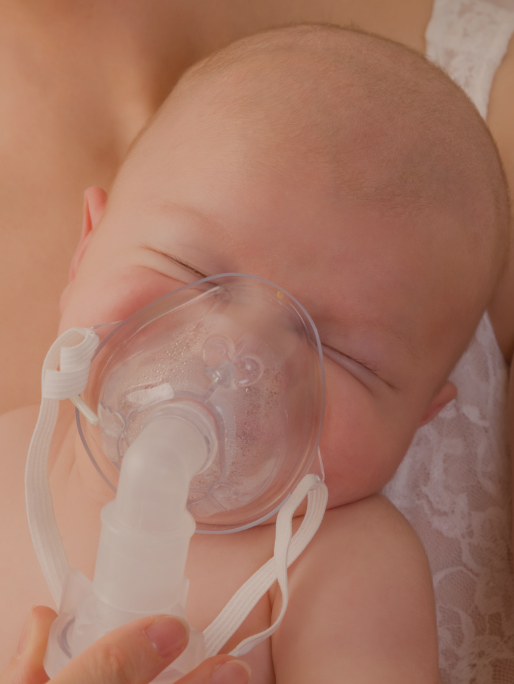
It may seem daunting, but a nebuliser is simply a device that turns liquid (like saline or medication) into a fine mist that’s inhaled into the lungs. In the ED setting we use it to deliver medications for asthma, severe croup or anaphylaxis.
At home, it can also be a really helpful tool for respiratory support, used to help open airways or loosen mucus, reduce work of breathing and even prevent the need for a trip to the ED, especially for things like:
bronchiolitis/RSV
mild croup
coughs, congestion
wheeze
reduce your trips to the hospital
Studies indicate that nebulised saline can help lessen trips to the emergency department (ED) and reduce hospitalisations, particularly for infants with acute bronchiolitis. PMID:37014057
One study published in JAMA paediatrics found a significant decrease in admission rates (28.9% in the 3% hypertonic saline group vs. 42.6% in the 0.9% saline group) for infants with bronchiolitis. PMID:24862623
Nebulised saline helps hydrate airways, thins mucus, and improves clinical severity scores.
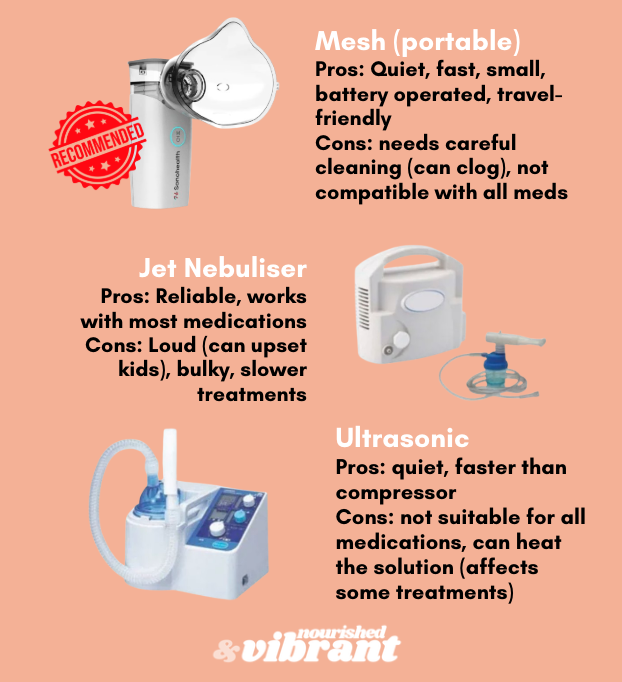
what type is right for you
what liquid to nebulise
As a nurse, I focus on what supports the body without adding unnecessary risk and with nebulising at home, simple is best. I recommend buying 10ml ampoules instead of 50–100ml bottles, as there’s less risk of contamination.
Isotonic saline (NaCl 0.9%)
This is what I recommend. It moisturises airways, thins thick secretions, helps loosen mucus, makes it easier to cough things up and is gentle enough for kids of all ages.
Hypertonic saline (3%)
Specifically used to break up thick, stubborn mucus. Often used in clinical settings for chronic lung conditions and severe bronchiolitis, but also when 0.9% normal saline is not effective enough.
NAC and glutathione
These can both be helpful in certain situations, but not routinely for otherwise healthy kids with mild coughs, colds or simple congestion.
N-acetylcysteine (NAC)
NAC helps break down thick mucus and supports glutathione production. It can support cystic fibrosis, chronic bronchitis and some cases of severe asthma. It is not without risk however and can induce bronchospasm. Should be used with practitioner guidance.
Glutathione
Nebulising glutathione (our key antioxidant involved in detox and cellular protection) can be used for environmental exposure e.g. smoke inhalation and chronic inflammation such as COPD, asthma, cystic fibrosis and chronic sinusitis. It’s also used to combat oxidative stress during viral infections. PMID:39125356
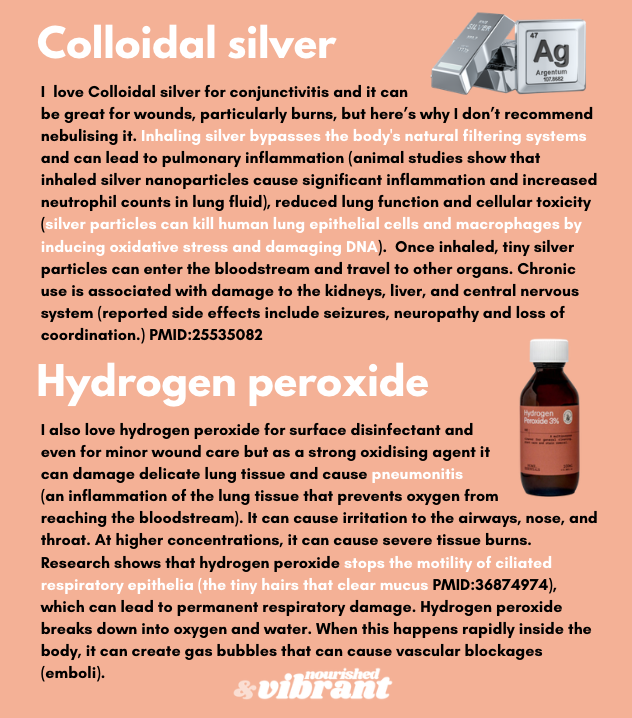
what NOT to put in your nebuliser
how to use your nebuliser
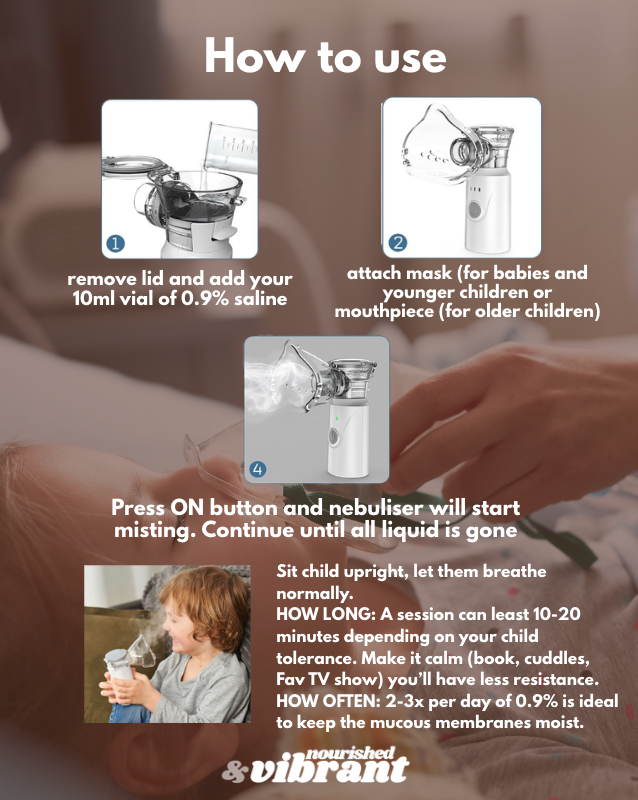
can i make my own saline?
You guys know I LOVE a DIY and technically you can make your own 0.9% (normal) saline solution by mixing:
1 tsp (5g) non-iodised salt
1L distilled water
boil for 15 minutes for sterility
However, I don’t recommend this unless absolutely necessary as there is a risk of contamination. Using store-bought sterile saline is safer for respiratory care. If you are using a homemade mix, discard after 24 hours.
when to seek help
Your nebuliser should never replace proper medical care. Get medical care if your child has:
fast or laboured breathing
chest pulling in (retractions)
wheezing that isn’t improving
blue lips or pale colour
lethargy or difficulty waking
important cautions
Nebulisers for asthma medications at home should be used under medical guidance only. Using nebulisers incorrectly can delay seeking care in serious situations.
cleaning
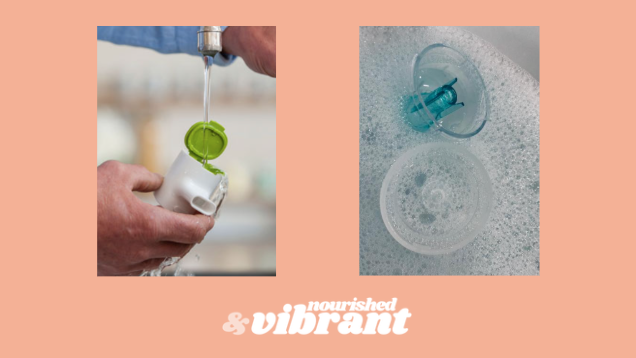
Nebulisers can grow bacteria and mould if not cleaned properly.
If you have a mesh portable neb, clean the mouthpiece/mask in warm soapy water after use. Rinse well and air-dry completely.
If you have a jet neb, once a week boil all parts except tubing in water with 2–3 drops of dishwashing liquid for 10 minutes.