Mould Prevention Hacks You Need to Know
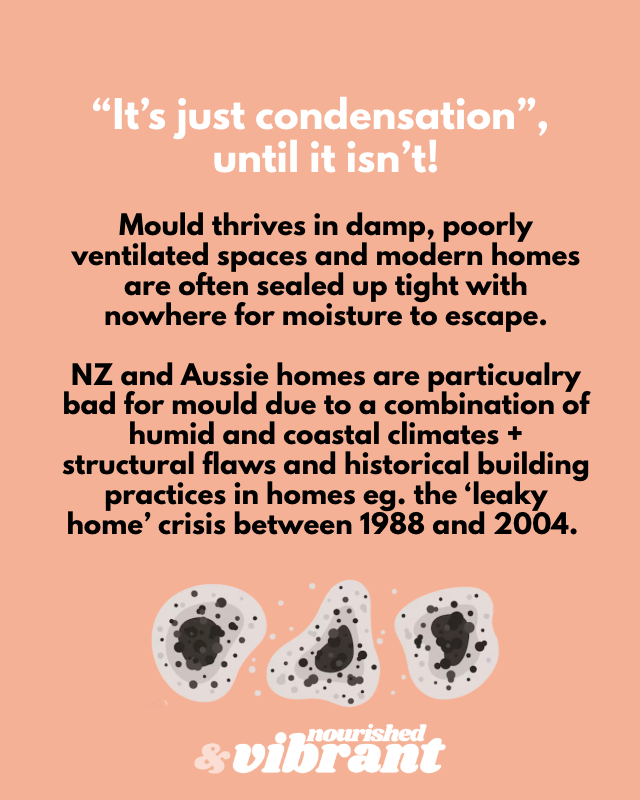
One of the most overlooked environmental stressors in the home is excess moisture and hidden mould exposure, and to clarify, you don’t need to see black mould covering a wall for it to be affecting you or your child.
symptoms triggered by mould
For some people, even low-level mould exposure can trigger symptoms like:
Chronic congestion or sinus issues
Coughing or wheezing
Eczema flares
Headaches
Fatigue or brain fog
Poor sleep
Hormonal disruption
Anxiety or irritability
Recurring illness
Asthma symptoms
Kids constantly “sick” with no clear reason
Sometimes the problem isn’t your child’s immune system, it’s the environment constantly burdening it.
some simple ways to reduce mould risk at home
Here are some simple, practical ways you can start reducing mould risk at home without overcomplicating it.
Open windows daily (even in winter)
Use extractor fans EVERY shower
Dry clothes outside where possible
Pull furniture slightly away from walls
Avoid overfilling wardrobes
Wipe condensation from windows
Keep indoor humidity ideally below 30–50%
Use a good quality dehumidifier
Check under beds, behind curtains & in wardrobes regularly
Don’t ignore that “earthy/musty” smell
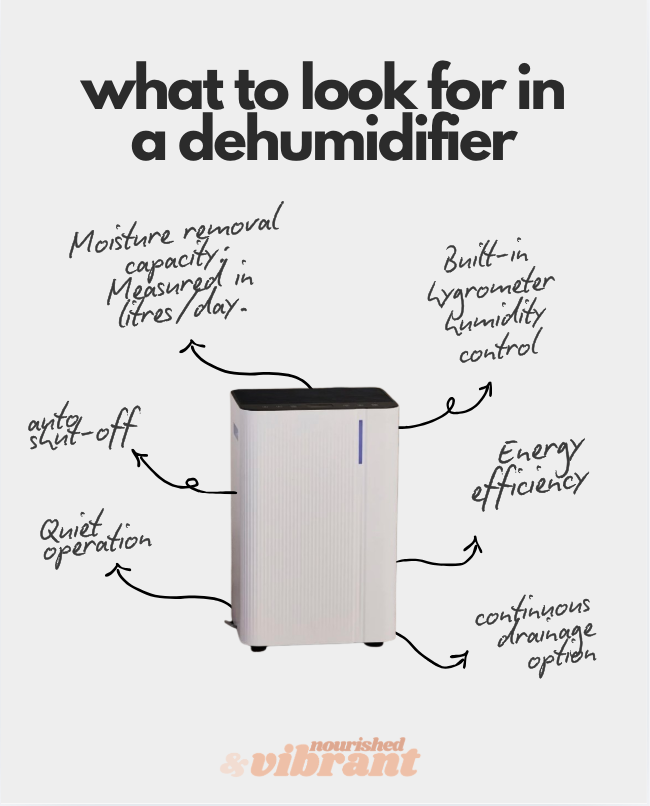
dehumidifiers
A dehumidifier is one of the most underrated “health products” in a home. Most people think they’re only for obvious mould, but excess indoor moisture can impact lungs, nervous system, allergies, sleep, and mould growth. Running a dehumidifier in problem areas like bedrooms, bathrooms, or laundries can make a significant difference to overall indoor air quality and moisture control.
My absolute favourite dehumidifiers are from Ausclimate, and my code STACKS ON! Use code “nourished10” for an extra 10% off,.
hygrometers
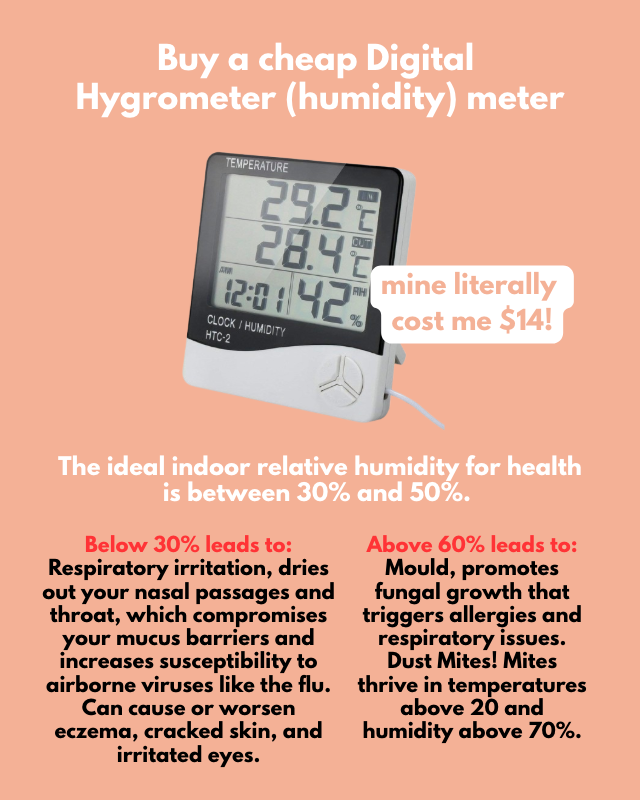
A hygrometer is a simple device that measures indoor humidity levels.
Most people guess humidity, but don’t actually measure it, which makes mould prevention much harder. Keeping humidity ideally between 30–50% helps reduce the conditions mould needs to grow, and a hygrometer lets you track this in real time. Using a hygrometer alongside a dehumidifier gives you a much clearer picture of what’s happening in your home environment and allows you to adjust before moisture becomes a bigger issue.
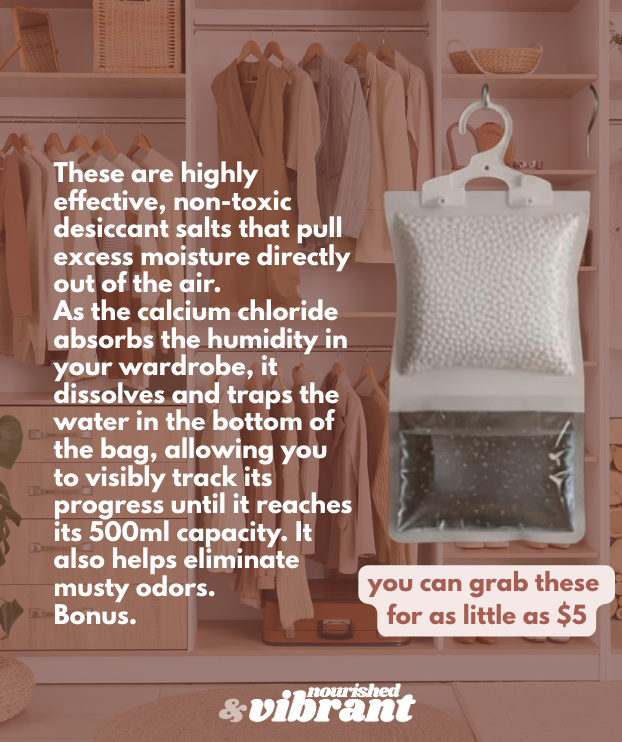
hanging bags of calcium chloride crystals or bamboo charcoal
I’ve also linked some moisture absorbers on my Amazon store, but you can also pick these up from Kmart and The Warehouse for around $5.
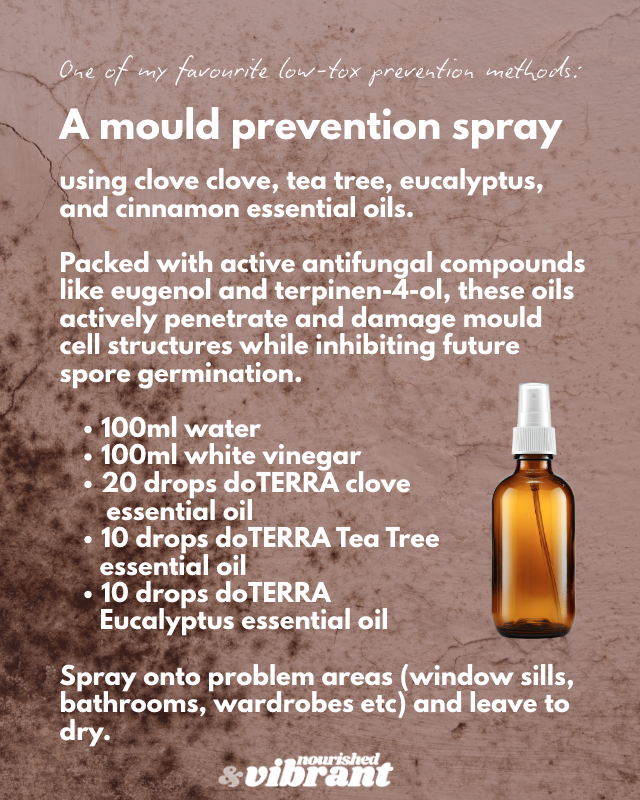
DIY mould prevention spray
One easy way to support mould prevention at home is with a simple DIY spray you can make and use on common surfaces.
Here is a link to 25% off oils that will actually KILL mould spores and prevent their growth on surfaces!