Low-Tox Car Seats: What You Need to Know
Most conventional car seats are made with synthetic fabrics, flame retardants, polyurethane foam, and plastic components that can off-gas chemicals like VOCs (volatile organic compounds), PFAS, and even flame retardant chemicals. Add heat and. a closed car and this is a tiny toxic load your child is breathing in daily.
Saftey isn’t just about crash testing, it’s also about what they’re exposed to every single ride. If you wouldn’t put it on their skin, why let them sit in it for hours?
what chemicals of concern are found in most car seats?
PFAS (aka “forever chemicals”)
Exposure has been linked to thyroid cancer, increased risk of asthma, liver damage, decreased fertility, immune disruption, and long persistence in the body. They are often used for stain and water repellency. These chemicals can migrate out of the product into household dust, which we then breathe in or ingest via hand-to-mouth contact. They can also be absorbed through the skin.
Flame retardant chemicals
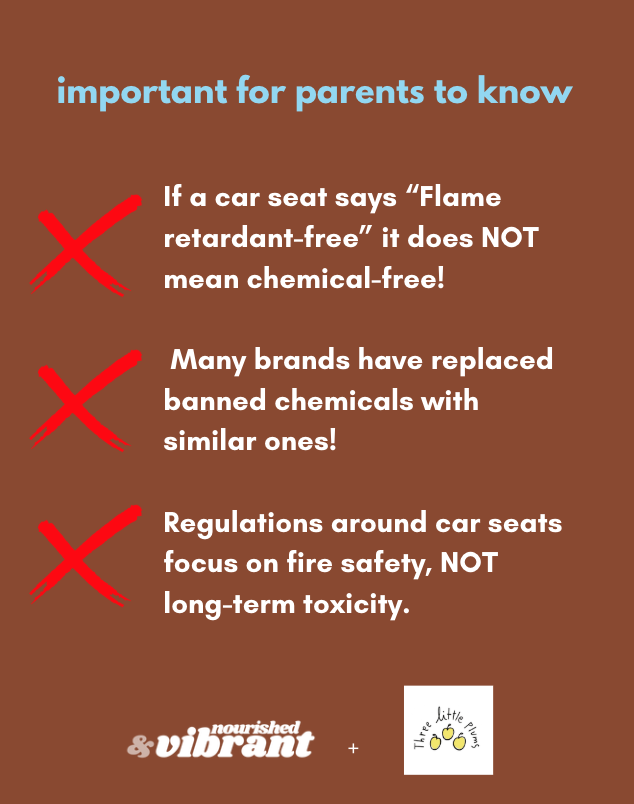
These are known endocrine disruptors, with neurodevelopmental concerns and potential carcinogenicity. They can easily migrate out of the seat and accumulate in air and dust, where children inhale them or transfer them from hands to mouth. Even newer “safer” replacements are not well studied long-term.
Microplastics and polyester
In an effort to avoid flame retardant chemicals, many manufacturers now use polyester for foam padding, which is inherently flame resistant. Polyester is a plastic and can expose your child to micro and nano plastics throughout the life of the fabric. It has also been linked to skin sensitivities and eczema, and is often treated with chemicals like phthalates and formaldehyde, which can leach onto the skin.
Phthalates
Used to soften plastics (including straps, buckles, and foam components). They are linked to endocrine disruption, reproductive effects, and may impair neurodevelopment in children.
why choosing better matters, especially for younger kids
Young children have a higher breathing rate. They have developing systems (brain, hormones, lungs, detox pathways). They are in very close, prolonged contact with car seats, often for hours a day. We recommend prioritising a lower-tox car seat, especially if you have a newborn, have long daily car time, or have a child with eczema or asthma.
so, what car seat should I buy?
It’s a personal choice. Of course, priority should always be given to safety, and then budget will come into play for many families. However, from a chemical exposure perspective, we would recommend prioritising:
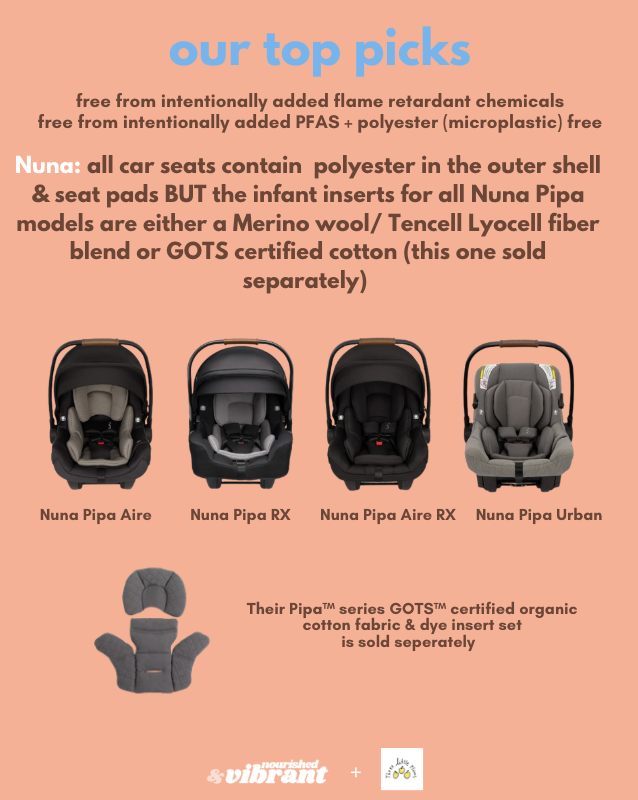
Free from intentionally added flame retardant chemicals
Free from intentionally added PFAS chemicals
Added bonus: car seats offering polyester-free fabric