Low Tox Insect Repellant & Why Avoid DEET
what’s “wrong” with DEET in insect repellents?
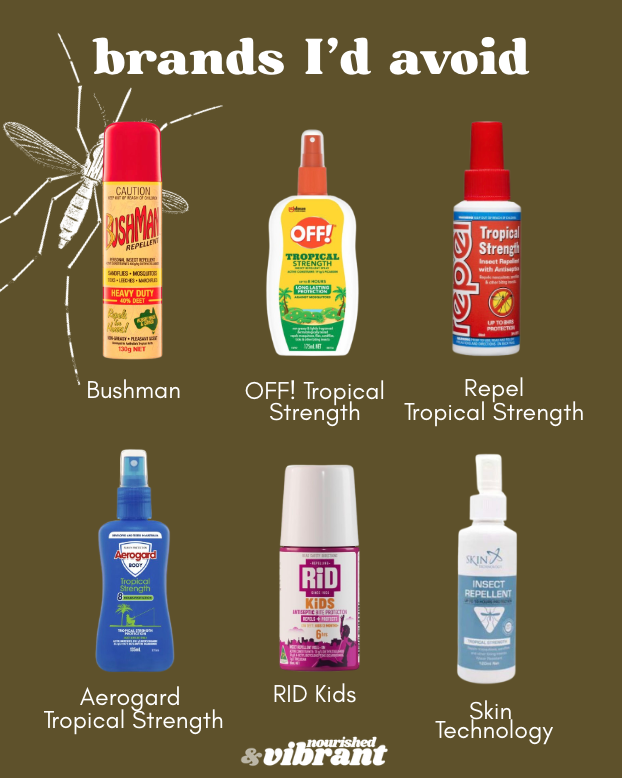
DEET absorbs through the skin: studies show 5–17% of DEET applied to the skin is absorbed into the bloodstream. It’s a known neuro-irritant, affecting insect nervous systems and in high doses or chronic exposure it can irritate the human nervous system, too. Possible issues include headaches, dizziness, skin tingling or burning, behavioural irritability in children and sleep disturbances.
DEET is a solvent, meaning it can disrupt the skin microbiome, worsen eczema, sting broken skin, increase absorption of other chemicals applied at the same time.
is picaridin a better alternative?
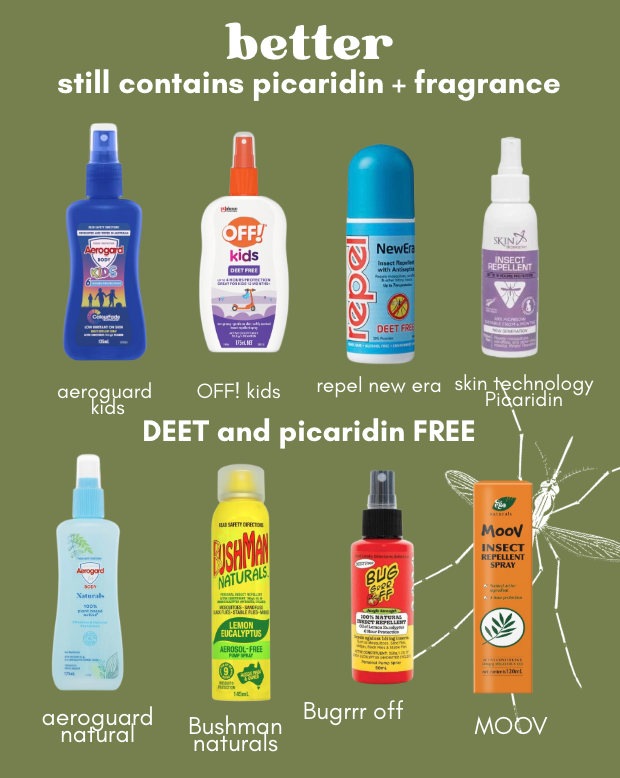
The short answer is yes. Picaridin is not a solvent like DEET, so it’s gentler on skin (doesn’t disrupt the barrier), it doesn’t act on the nervous system the way DEET does and the absorption rate is lower than DEET.
BUT t’s still a synthetic chemical. It’s safer than DEET, but not “natural.” If you’re using it wash off at the end of the day and avoid spraying near mouth/nose. Kids are wiggly, so if using, use a lotion or apply by hand to avoid inhalation.
other ingredients to avoid
Butane, Alcohol Denat., Diethyl Toluamide (aka DEET), Isopropyl Myristate, N-Octyl Bicycloheptene Dicarboximide, Fragrance, Diethyltoluamide, N-Octyl Bicycloheptene Dicarboximide.
Butane: may contain 1.3-butadiene a carcinogen, contact can irritate/burn the skin & eyes, inhalation can irritate nose & throat.
Alcohol denat.: alcohol denatured with various chemicals (not disclosed) which can include diethyl phthalate an endocrine disruptor.
Diethyl Toluamide (DEET): high concentrations can lead to toxic encephalopathy with severe neurological symptoms including seizures, tremors and slurred speech. The risk is higher for children since they have a greater surface area to body weight ratio. Banned in many countries in the EU.
Fragrance: undisclosed number of chemicals that can contain endocrine disruptors.
but do natural repellants actually work?
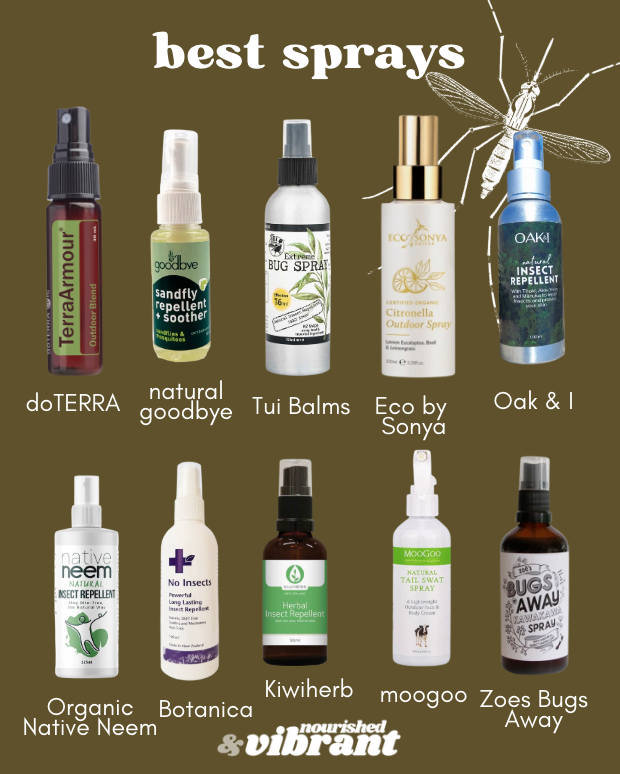
YES! There are many research papers to prove it! eg. PMID:16896651, PMID:25438256, PMID:36717735, PMID:19729299.
The consensus is that: "these natural products have the potential to provide efficient, and safer repellents for humans and the environment." (PMID: 19729299)
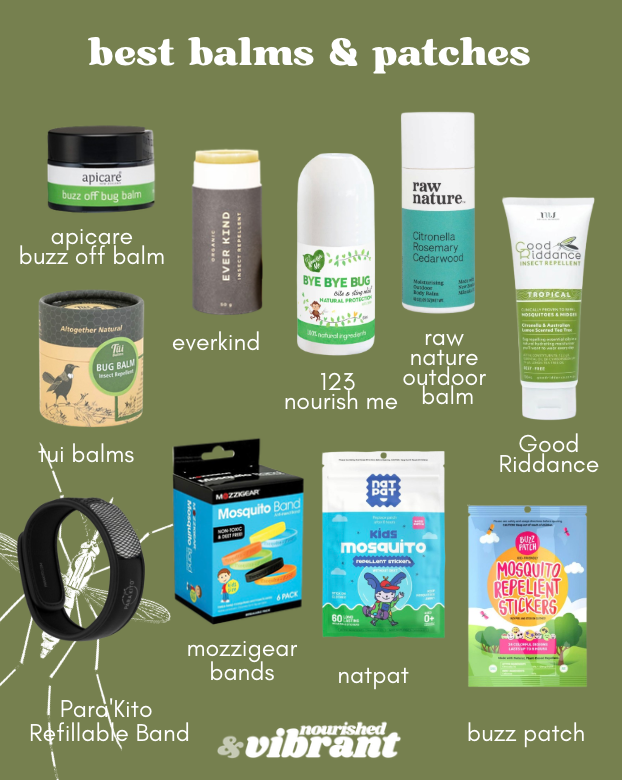
Multiple peer-reviewed studies show essential oils can repel insects in laboratory or field tests. BUT essential oils generally provide shorter protection times than DEET, so my advice is REAPPLY as needed.