
How to Choose a Low Tox Kettle
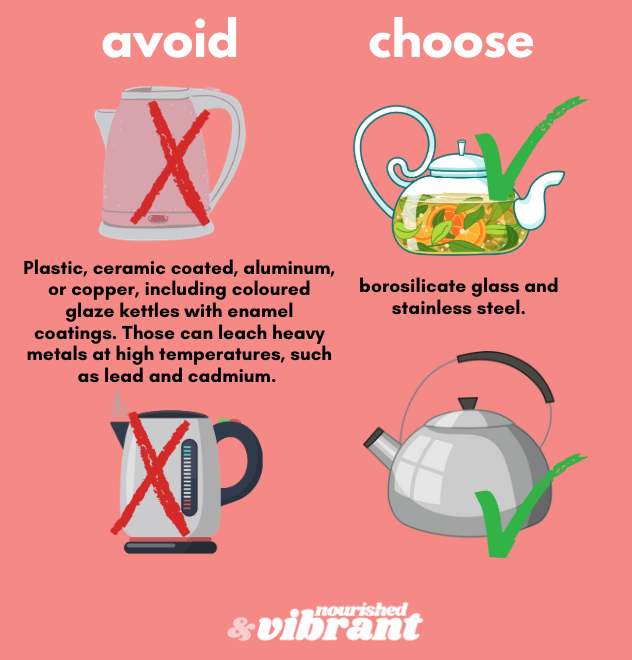
The number one material you should absolutely avoid if you’re looking for a non-toxic kettle is plastic. Plastic can release harmful chemicals when heated, even if it’s ‘BPA-free’. Try to avoid kettles that have plastic parts and heating coils directly exposed to the boiling water.
what materials to choose and avoid
best kettles
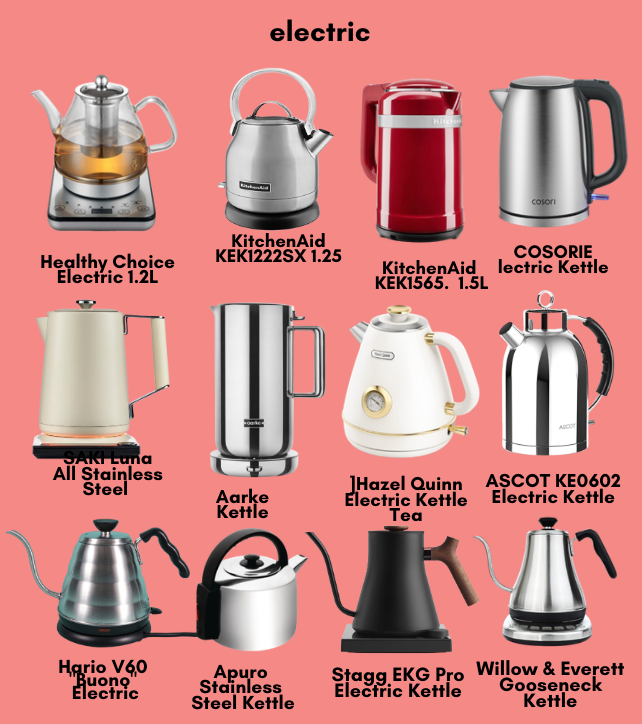
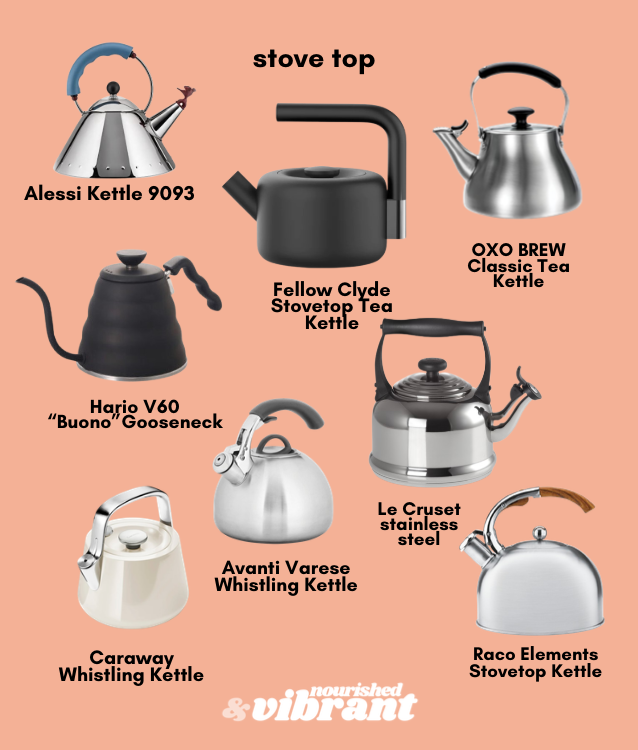
better brands
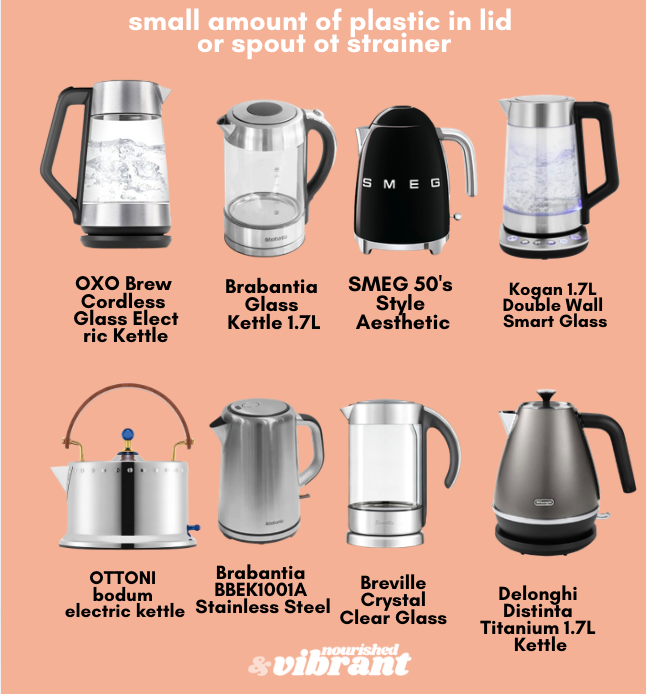
important reminder
Finding a kettle with zero plastic parts can be challenging and expensive. If you find a stainless steel or glass kettle with a small amount of plastic in the lid, personally I’m ok with this as it’s not touching the water (just the steam) and it’s much better than the vast majority of kettles. Remember: better, not perfect!
how to clean your low-tox kettle
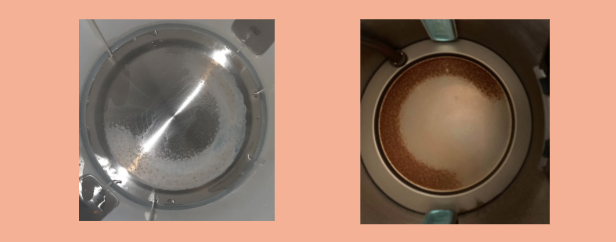
Option 1: For limescale
Best if you have hard water buildup (white, crusty scale).
1–2 tbsp citric acid powder
Half-full kettle of water
Fill kettle halfway with water, add citric acid and boil. Let sit for 20–30 minutes, then pour out. Rinse 2–3 times with fresh water.
Option 2: For odours
Good for smells, light residue, or a general refresh.
1 tbsp baking soda
Half kettle of water
Add baking soda and water, bring to a boil. Turn off and let sit for 15–20 minutes. Pour out and rinse well.